FR
FR
 EN
EN

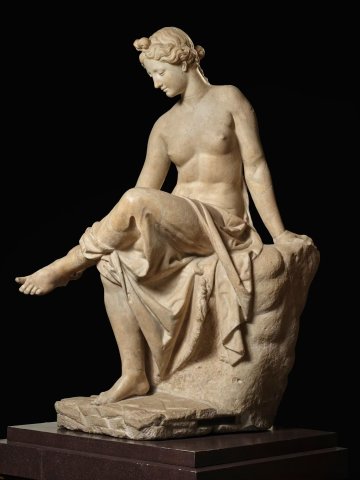
Seated nymph (“Invitation to Dance” group)
Description
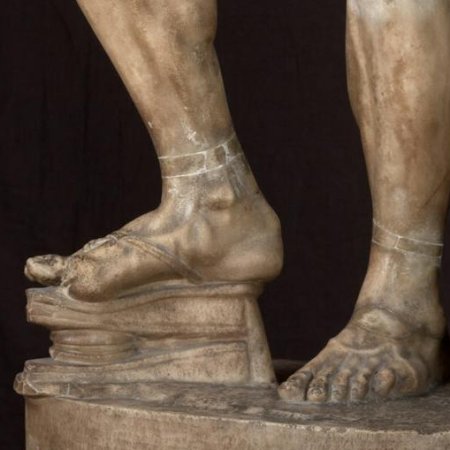
The seated nymph must originally have been tying or removing a sandal, which was lost during successive restorations. The head, neck, bust, right hand, feet and front of the base are modern.
The original head was probably turned more sharply to the right, the hairstyle consisting of a simple bun, the smile showing the teeth, according to the type of the Maenad.
2. Nearly 40 replicas of this model exist, dating from the 3rd century BC to the 2nd century AD. The drapery work here seems characteristic of the 2nd century A.D.
In the early 16th century, this one is documented in the Palazzo Caffarelli in Rome; in 1568, it can most likely be identified with one of the statues in the Pitti Palace's Hall of Niches described by Vasari.
3. The seated nymph may have been part of the L'invitation à danser group, along with the dancing satyr.
Technical Data
Notice #025715