
 FR
FR
 EN
EN
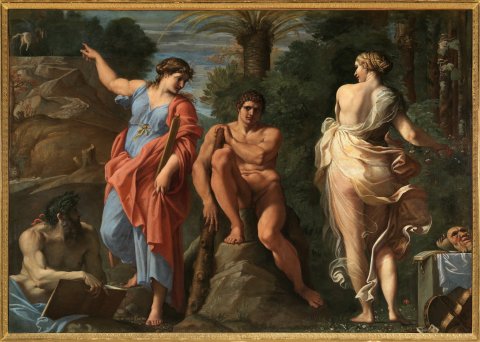
Hercules between Virtue and Voluptuousness - Annibal Carracci
Description
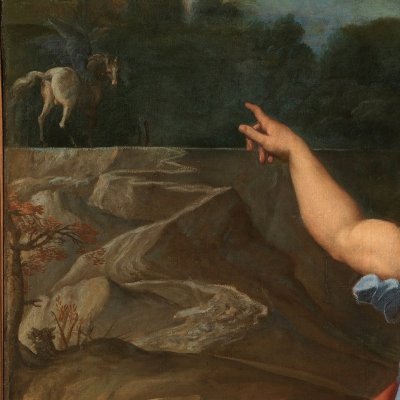
On the left, Minerva shows a hesitant Hercules the steep path to glory, at the top of which caracolates Pegasus, the winged horse that struck the ground with its hoof, bringing forth the Hippocrene fountain of poetic inspiration: Pegasus was also the emblem of the Farnese family, for whom Carracci painted this canvas. At Minerva's feet, a god opens the book of History. Behind, a dead tree stump shows that the right path is barren, and first crosses barren ground.
On the right, Venus from behind, half undressed, displays her charms before Hercules. On a table beside her, the mask of the theater, a musical score, a tambourine and a violin. She sows flowers, but in front of her the lush forest leaves no room for a path.
2. Cardinal Odoardo Farnese's bedroom. Painted as Hercules in the central painting, the cardinal must choose between vice and virtue. The original of this oil painting is now in the Capodimonte Museum in Naples: the Camerino d'Hercule, in the Farnese Palace, only preserves a copy.
The subject is said to have been suggested to Carragher by Cardinal Odoardo Farnese.
The subject is said to have been suggested to Carracci by the Farnese librarian, Fulvio Orsini.
The canvas left the Farnese palace in 1662; after various destinations, it entered the Gabinetto dei quadri osceni of the Musée Royal des Bourbons.
Technical Data
Notice #001327