FR
FR
 EN
EN
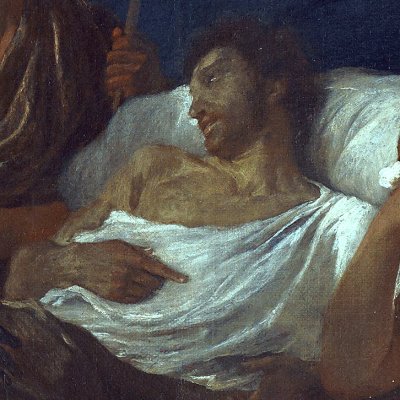
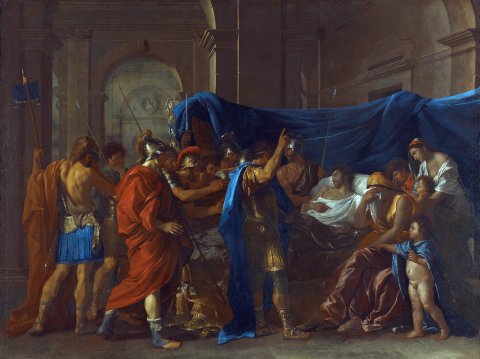
The death of Germanicus - Poussin
The William Hood Dunwoody fund
Description
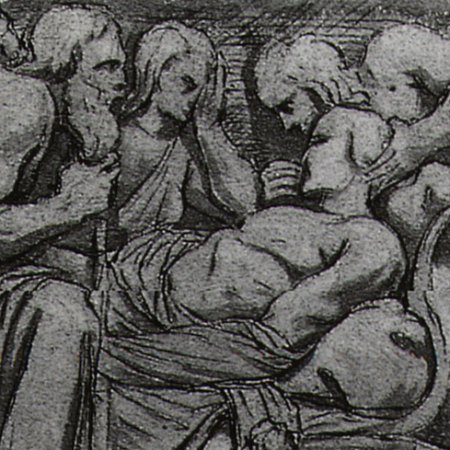
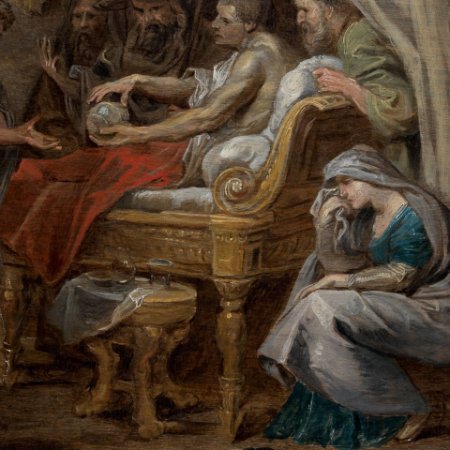
According to the conventions of classical history painting, the painting is supposed to stage Germanicus' speech as imagined by Tacitus in Book II of the Annals. Here, however, the speech appears to be over. Poussin has chosen the moment when Germanicus has just expired, poisoned by Pison and Plancine. He depicts the various reactions of the audience after the event. In the right foreground, his wife Agrippina, surrounded by her children, veils her face in despair, in a gesture whose iconographic tradition goes back to Timante's Agamemnon, veiling his face before the sacrifice of his daughter Iphigenia. On the left, Germanicus' soldiers are divided between sadness on the left and revolt on the right: in the center, one of them raises his right arm, attesting to the gods that his general will be avenged.
2. Commissioned in October 1626 by Cardinal Francesco Barberini, nephew of Pope Urban VIII, the painting was delivered by Poussin in January 1628.
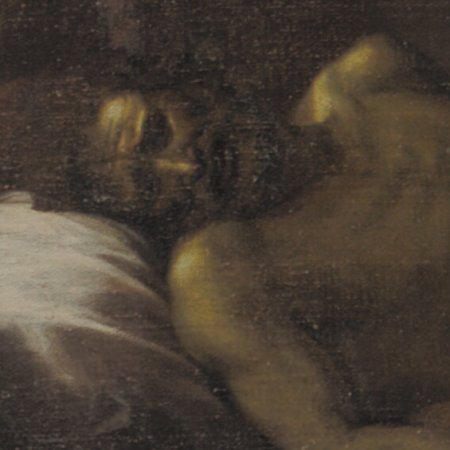
The colors of the painting are very damaged, the original plate is very yellow.
3. We've linked the notice with a few other examples of the use of an interior architectural perspective offset from the restricted space of the scene. Some thirty copies of this painting exist. The oldest engraving is by Guillaume Chasteau.
Technical Data
Notice #000963