FR
FR
 EN
EN
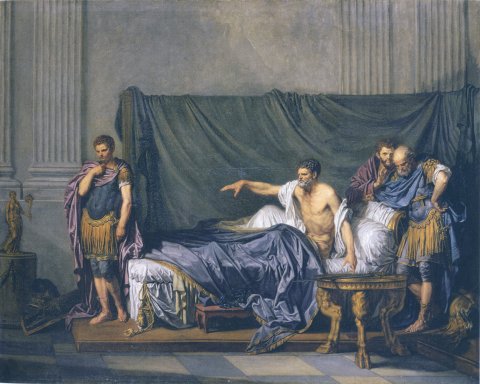
Emperor Severus blames Caracalla for trying to assassinate him - Greuze
Notice précédente Notice n°33 sur 45 Notice suivante
Description
Booklet from the 1769 Salon:
"By Mr. Greuze, Agréé.
151. The Emperor Severus reproaches Caracalla his son, for having wanted to assassinate him in the defiles of Scotland, and says to him: If you wish my death, order Papinian to give it to me with this sword. "
Diderot's commentary:
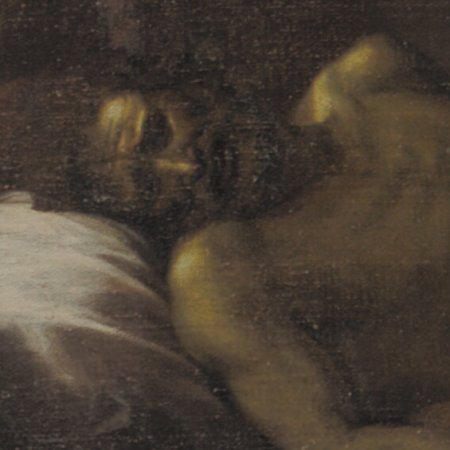
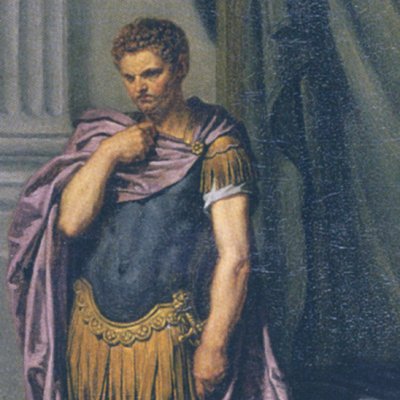
"You know, my friend, that artists who confine themselves to the imitation of subaltern nature and to country, bourgeois and domestic scenes have been relegated to the class of genre painters, and that it is only the historical painters who make up the other class who can lay claim to professorships and other honorary positions. Greuze, who is not lacking in self-esteem and in whom it is very well founded, had proposed to paint a historical picture and acquire the right to all the honors of his Academy. His subject was Septimius Severus, reproaching his son Caracalla for having made an attempt on his life in the defiles of Scotland; his moment is when Septimius, having summoned his son, tells him: If you wish my death, order Papinian to give it to me. We saw this sketch in his studio, and I'm sure you'll agree that it promised to be a fine painting. Although he changed canvas, his composition remained the same. The scene takes place in the morning. Septimius has risen from his bed and is sitting half-naked. He is talking to Caracalla. His left hand is that of a man giving orders, while his right, pointing to a sword on a bedside table, explains the meaning of the order given. Papinian and a senator are at the bedside, Caracalla at the foot; these three figures are standing. Caracalla has the character of a villain more ashamed than contrite Septimius speaks forcefully and gravely Papinian looks confused the senator seems astonished.
The day came when this painting, completed with the utmost care, praised by the artist himself as a piece to contend with the best Poussin had done, seen by the director and a few commissioners, was presented to the Académie. You can well imagine that it was not examined with the eyes of benevolence Greuze had for so long shown such frank and clear contempt for his fellow artists and their works !
. Here's how it goes under the circumstances. The Académie assembles the painting is exhibited on an easel in the middle of the room the academicians examine it. However, the approved artist, alone in another room, wanders around or sits, awaiting his judgment Greuze, or I am very much mistaken, was not very worried about it.
. After an hour, the two doors opened, Greuze entered the director said to him : " Monsieur, the Académie welcomes you approach and take the oath. " A delighted Greuze complied with all the reception ceremonies. Then the director said to him: " Monsieur, the Académie has received you, but it's a genre painter it has paid attention to your previous productions, which are excellent and it has turned a blind eye to this one, which is not worthy either of it or of you. "
In this instant Greuze, crestfallen of his hope, lost his head, amused himself like a child in supporting the excellence of his painting, and we saw the moment when Lagrenée drew his pencil from his pocket in order to mark him on his canvas even the incorrectness of his figures.
What would someone else have done ? you may ask. Someone else, me for example, would have drawn his knife from his pocket and torn the painting to pieces then he would have put the border around his neck, told the Academy that he wanted to be neither a genre painter nor a history painter he would have gone home to frame the marvelous heads of Papinien and the Senator, which he would have spared amidst the destruction of the rest, and left the Académie confused and disgraced yes, my friend, disgraced : because Greuze's painting, before being presented, was considered a masterpiece, a prejudice that the debris would have perpetuated forever, debris that the first amateur would have acquired at the weight of gold.
Greuze, on the other hand, remained convinced of the merit of his work and the injustice of the Académie, went back to his house to face the angry reproaches of the most violent woman, let his painting be exhibited in the Salon and gave his defenders time to reconsider their error and recognize that he had clumsily offered his irritated colleagues the opportunity to repay in an instant all the contempt he had shown them, without hurting the laws of fairness.
That's the story of Greuze's adventure, which has caused quite a stir here. If you don't want to stick to what I'll tell you about his painting in my next letter, you can go and see it in the rooms of the Académie, where his rivals wouldn't let him out for all the gold in the world.
In Greuze's place, I'd like to have my revenge.
I no longer love Greuze, in spite of this, I was really annoyed by the mortifying scene he endured, and I was about to go and console him when I was prevented by a suspicion that displeased me in him...
I was supposed to dine with you today and give you this letter and the two previous ones ; I was detained by my wife who believes that my presence relieves her daughter from her long-lasting indisposition. Good evening.
I promised you, my friend, that I would tell you about Greuze's reception piece and that I would tell you about it without bias. I'll keep my word.
First of all, you should know that the paintings of this artist caused the greatest sensation in the world and at the Salon, and the Académie suffered with sorrow that a man so skilled and so justly admired had only the title of agréé.
It wanted him to be decorated with the title of académicien, and the desire and the letter that the secretary Cochin was asked to write to it accordingly are a fine eulogy of Greuze. I have seen the letter, which is a model of honesty and esteem; I have seen Greuze's reply, which is a model of vanity and impertinence. It needed to be backed up by a masterpiece, and that's what Greuze didn't do.
Septimius Severus is despicable in character, with the dark, swarthy skin of a convict his actions are equivocal. He's badly drawn, with a broken wrist. The distance from the neck to the sternum is disproportionate, and we don't know where the knee on the right thigh that raises the blanket goes or belongs. Caracalla is even more despicable than his father, a vile, low-down rascal the artist didn't have the art to combine wickedness with nobility. It's a wooden figure with no movement and no suppleness. It's Antinous disguised in Roman garb, I'm as sure of that as if the artist had confided it to me.
But, you may ask, if the Caracalla is based on the Antinous, it must be a fine figure. Answer. Have Raphaël draw the Antinous, and you'll have a masterpiece; have an ignoramus trace the Antinous in the veil, and you'll have a cold, miserable drawing. - But Greuze is no ignoramus. - The most skilful man in the world is an ignoramus when he attempts something he has never done. Greuze is out of his depth: a scrupulous imitator of nature, he has failed to rise to the kind of exaggeration demanded by historical painting. His Caracalla would be perfect in a rural and domestic scene he would be the brother of that tall boy who listens upright to the old man reading to his children.
. Conclude from the above that he who has seen the beautiful statues of antiquity only from plaster casts, however perfect they may have been, has not seen them.
The Papinian's head is very beautiful, but it doesn't match the rest of the body; his head is made to be large and the body to remain small. It is from this head to the body as from a Teniers to a Wouwermans.
Take the smallest Teniers, take it to a copy painter, and ask him to make you a large composition of it, a composition six feet wide by five feet high the artist will divide his large canvas into small squares each of these small squares will contain a proportionate part of the small painting ; and if your copyist has talent, be sure of getting a good thing. Don't ask him to do the same on a Wouwermans; Wouwermans are made to be copied in the exact size of the original. So buy a Wouwermans as you would a precious diamond, but buy a Teniers as you would a connoisseur of painting.
. The senator's head on the background is perhaps even more beautiful than Papinien's.
The linens and blankets on the emperor's bed are of the worst taste in color and folds.
But that's not the worst of it, it's that there's no principle of art in the whole thing. The background of the painting touches the curtain of Severus's bed, the curtain touches the figures, all of which has no depth, no magic it seems as if the artist has been deprived, as if by a spell, of the part of his talent that cannot be lost Chardin has told me twenty times that this was an inexplicable phenomenon for him. No color, no truths of detail, no facts. A pupil's painting, too good to leave any hope of better. No harmony, all dull, hard and dry. Take this criticism, wear it in front of the painting, and you may find that you can add to it, but you can't take anything away from it. "
2. Artist's reception piece. The Académie accepts him as a genre painter, not a history painter. Wounded, Greuze stops exhibiting at the Salons.
3. Diderot admires a sketch of the painting in the summer of 1767. Greuze drew inspiration for the composition from Poussin's La Mort de Germanicus (see link).
Technical Data
Notice #001055