×
Recherche infructueuse
Associé à une fiche membre :
Affiliation :
Aix-Marseille Université, CIELAM

149 notices. Affichage des notices 127 à 147.
Affiner la recherche

Articles

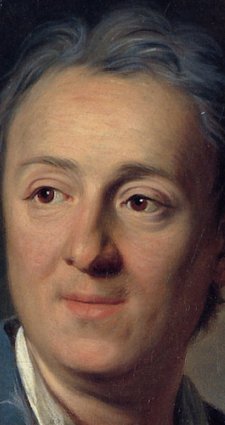
Diderot par Vanloo
"This work will surely in time produce a revolution in minds, and I hope that tyrants, oppressors, fanatics and intolerants will not gain from it. We will have served humanity; but it will be a long time before we are reduced to cold, unfeeling...
Diderot par Vanloo
Diderot doesn't strictly speaking theorize Beauty. He encounters different models, he measures himself against different discourses on the Beautiful1. First of all, there's the Beautiful understood as wonder of the world; articulated with the...
Diderot par Vanloo
Description L’Essai sur les règnes de Claude et de Néron 1, l’une des dernières œuvres de Diderot, n’est pas non plus l’une des moins déconcertantes. Au premier abord, on ne voit rien de très original à cette œuvre très inscrite dans la...
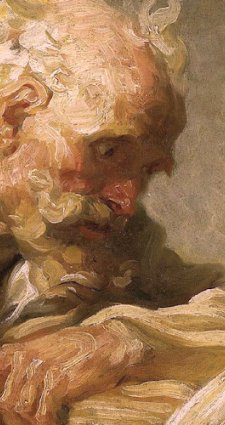
Fragonard, Le Philosophe
There's no question here of defining in general what fiction is. The word is sufficiently general and vague to encompass just about anything and everything. What we would like to ask here is how the notion of fiction constitutes an issue for the...
Diderot par Vanloo
In chapter XIX of his discourse De la poésie dramatique, which appeared with Le Père de famille the year after Le Fils naturel, in May 1758, Diderot again insists on the need to strip the stage of all loaded scenery: Theatrical painting will...
Diderot par Vanloo
Diderot composed Le Fils naturel and the Entretiens in the late summer of 1756. The serious comedy of Le Fils naturel is embedded in the fiction and commentary of Entretiens, a promenade during which the melancholy Dorval answers Diderot's questions...
Fragonard, Le Philosophe
Loces d'Angélique et de Médor, Nantes, Musée des Beaux Arts. The couple in the foreground on the right, and the child standing at their feet, form a visual clutch" data-entity-type="" data-entity-uuid="" src="/system/files/styles/large/private/...
Fragonard, Le Philosophe
The intersector is a rectangular frame stretched over a very fine, squared canvas that the draftsman places between himself and his model, then transfers square by square what he distinguishes through it. In his treatise De la peinture (1435),...
Fragonard, Le Philosophe
The images contained in the Utpictura18 database belong to a cultural environment where the difference between text and image is irrelevant, or secondary: images give themselves to be read, and reference to theater, a visual spectacle, is...
Fragonard, Le Philosophe
The scopic dimension of the device manifests itself in what, in the scene, makes a tableau: all of a sudden, it's all we see; all the discourses, all the expected structures fall away, everything reconfigures itself around it. The scopic...
Fragonard, Le Philosophe
Pragmatic origins of the notion In pragmatic linguistics, performative speech is speech that symbolically transforms the world. Some canonical examples of performative speech are "Je te baptise", "Je vous déclare unis par les liens du mariage", "...
Fragonard, Le Philosophe
The instant prégnant is the time the scene lasts in classical aesthetics. This time must at once be zero, in order to be fixed in tableau, and inscribe itself in duration, so that this tableau can be read as a story, in accordance with the doctrine...
Fragonard, Le Philosophe
Optics and metaphysics of Descartes The word "geometrical" is not a modern invention. A definition can be found in the article PERSPECTIVE in the Encyclopédie, signed by the Chevalier de Jaucourt: "Before entering into greater detail, it is...
Fragonard, Le Philosophe
Vague space is, in an image representing a scene, the space that indicates the real, at the margin of the scene itself. The notion of vague space is justified by research into perspective, which, since Alhazen's treatise (10th c., Latin...
Fragonard, Le Philosophe
Atys, opera by Lully, libretto by Quinault, Act III, scenes 4 and 5)" data-entity-type="" data-entity-uuid="" src="/system/files/styles/crop_thumbnail/private/notices/005/haute_def/005549.jpg?h=679f398f&itok=HC90ZYGz" /> The restricted...
Fragonard, Le Philosophe
The screen is the central element of the scenic device, which regulates both the material order (the distribution of characters in space) and the symbolic play (the prohibition that the scene transgresses, the subversion it operates, the scandal it...
Fragonard, Le Philosophe
The device: a contemporary reality and challenge Fortune of the word The word device is encountered everywhere today. Has a catastrophe occurred? The government, the public authorities, the city or the region set up a device for help,...
Fragonard, Le Philosophe
Discursive logic is the sequence of utterances in a discourse along a logical line of the type: A => B => C... When discourse recounts events (historical narrative, or fictional narrative) it follows chronology; when discourse...
Fragonard, Le Philosophe
We take the semiotic cut here in a sense that is not linguistic (the separation of the sign into a signifier and a signified), but semiological: it's about what in the text makes sense as a cut, signifies the cut between the characters and the code...
Fragonard, Le Philosophe
The continuum sensible is the system of communicating meaning that, in the second half of the eighteenth century, is set up in scenic devices. The body, flesh and touch provide a form of communication that neither the gaze nor the spoken word can...